
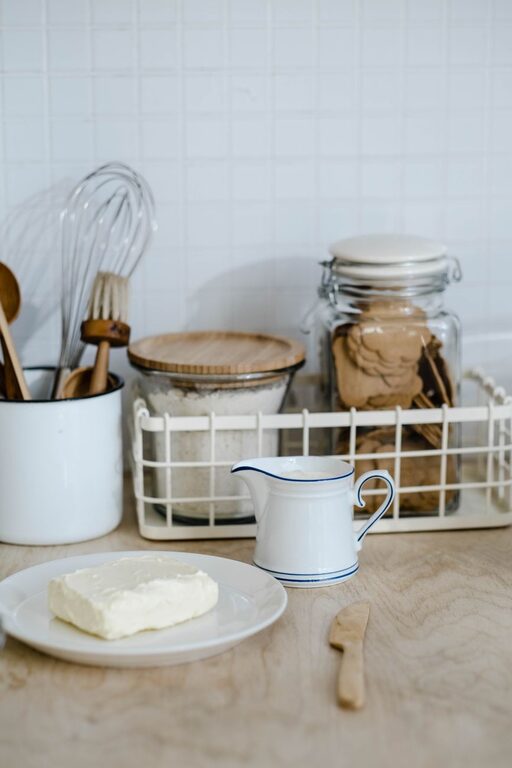
A small kitchen does not have to limit what you can cook. With the right tools, you can prepare everyday meals efficiently while keeping counters and cabinets organized. The key is to choose items that serve more than one purpose, are easy to clean, and fit comfortably into your available space.
Instead of collecting every kitchen gadget, focus on a reliable set of essentials. A few well-chosen tools can handle chopping, mixing, cooking, baking, and storing without creating clutter.
Start With Basic Hand Tools
Hand tools take up little space and are useful for nearly every meal. Choose durable versions with comfortable handles and simple designs.
Chef’s Knife
A good chef’s knife is one of the most useful tools in any kitchen. It can chop vegetables, slice fruit, mince herbs, and prepare meat or other ingredients. One medium-sized knife, usually around 8 inches, is often enough for most home cooking tasks.
Keep the blade sharp and store it safely. A knife guard, magnetic strip, or compact knife block can protect the blade while using minimal space.
Paring Knife
A paring knife is helpful for small tasks such as peeling, trimming, and cutting small fruits or vegetables. It is not a replacement for a chef’s knife, but it complements one well and takes up very little room.
Cutting Board
Choose a cutting board that is large enough for comfortable prep but small enough to store vertically or in a cabinet. A board with a handle or hanging hole can be easier to store in a compact kitchen.
If possible, use a board made from a durable, easy-to-clean material. A nonslip edge can also make food preparation safer and more comfortable.
Kitchen Shears
Kitchen shears can cut herbs, open packages, trim poultry, and divide food into smaller portions. Look for a pair that comes apart for cleaning. They can replace several smaller tools and are especially useful when drawer space is limited.
Choose Versatile Cooking Equipment
The best cookware for a small kitchen is flexible enough to handle several types of meals. Avoid buying multiple pans that perform nearly identical jobs.
One Large Skillet
A large skillet can be used for sautéing vegetables, frying eggs, cooking grains, browning meat, and making one-pan meals. A skillet with a lid adds even more versatility because it can be used for simmering and steaming.
A nonstick skillet is convenient for delicate foods and simple cleanup. A stainless steel or cast iron option may offer greater durability, depending on your cooking style and storage space.
One Saucepan
A medium saucepan is useful for cooking pasta, rice, oatmeal, sauces, soups, and vegetables. Select one with a lid and a comfortable handle. A saucepan that can be placed inside a larger pot may be easier to store.
Sheet Pan
A sheet pan is valuable for roasting vegetables, baking simple meals, and preparing larger portions. It can also serve as a surface for cooking several ingredients at once, which reduces the number of dishes needed.
Choose a pan with a sturdy rim and a size that fits your oven. If cabinet space is tight, store it vertically beside a cutting board or inside the oven when the oven is not in use.
Dutch Oven or Compact Pot
If you often make soups, stews, pasta dishes, or baked meals, a medium Dutch oven or heavy pot may replace several pieces of cookware. It can move from stovetop to oven, depending on the model.
For a very small kitchen, choose a size that matches your usual portions. A pot that is too large may be difficult to lift, clean, and store.
Add Small Appliances Carefully
Small appliances can be helpful, but they can also quickly fill a countertop. Before buying one, consider how often you will use it and whether a manual tool can do the same job.
Toaster Oven
A toaster oven can toast bread, reheat food, roast vegetables, and bake small portions. It may reduce the need to use a full-size oven for everyday tasks.
Look for a model that fits safely on your counter and has controls that are easy to understand. Leave enough space around it for safe operation.
Electric Kettle
An electric kettle is useful for tea, coffee, oatmeal, instant soups, and boiling water for cooking. It can heat water quickly without taking up much counter space. A compact model is usually sufficient for one or two people.
Immersion Blender
An immersion blender can purée soups, blend sauces, and prepare smoothies directly in a pot or container. Since it is smaller than a countertop blender, it is a good choice for limited storage.
Choose a model with removable parts if possible. This makes cleaning easier and allows the tool to be stored in a drawer.
Compact Food Scale
A small food scale is useful for baking, portioning ingredients, and measuring items accurately. Many models are thin enough to store in a drawer or stand upright beside other tools.
Keep a Few Useful Measuring and Mixing Tools
Measuring and mixing tools are easy to overlook, but they support reliable results and efficient preparation.
– Measuring cups for dry ingredients
– Measuring spoons for small amounts
– A liquid measuring cup with a clear scale
– Two or three mixing bowls
– A silicone spatula
– A wooden spoon or heat-safe spoon
– A whisk
– Tongs
Choose nesting measuring cups and bowls to save cabinet space. Mixing bowls with flat bases can also double as serving bowls or storage containers.
Tongs are especially versatile. They can turn food in a skillet, serve salad, lift pasta, and handle hot items. A locking pair takes up less room in a drawer.
Select Storage Tools That Do More
Storage containers help reduce waste and keep a small kitchen organized. Look for containers that stack securely and use similar shapes and sizes.
Clear containers make it easier to see what you have. Choose a few practical sizes rather than a large collection of mismatched pieces. Containers that work in the refrigerator, freezer, and microwave can be particularly useful, provided they are labeled for those uses.
Reusable bags, clip-on labels, and a simple marker can help identify leftovers and ingredients. A compact rack or shelf riser can create extra vertical storage inside a cabinet.
Make Organization Part of the Setup
The right tools work best when they are easy to reach. Store frequently used items near the area where you prepare food. For example, keep knives and cutting boards close to the counter, and place pots and pans near the stovetop.
Use drawer dividers for small utensils and a wall-mounted rail for tools with hanging loops. Store lids vertically with a simple divider, or place them inside the matching pot if space allows.
Review your kitchen tools from time to time. If an item has not been used in many months and does not serve a special purpose, it may be taking up valuable space.
Build Your Collection Gradually
A small kitchen benefits from thoughtful choices rather than a large collection of equipment. Begin with a chef’s knife, cutting board, skillet, saucepan, sheet pan, mixing bowls, measuring tools, and a few dependable utensils. Add appliances or specialty tools only when they solve a regular cooking need.
By choosing versatile items, using vertical storage, and keeping only what you use, you can create a compact kitchen that feels organized and works efficiently every day.